Turning Shorts Viewers Into Long-Form Subscribers
Shorts views rarely convert on their own. The bridge content, the end-screen behaviour and the pacing change that makes them stick.
Summary — the short answer
- Shorts subscribers are Shorts subscribers by default — they subscribed expecting more Shorts, not a 14-minute video.
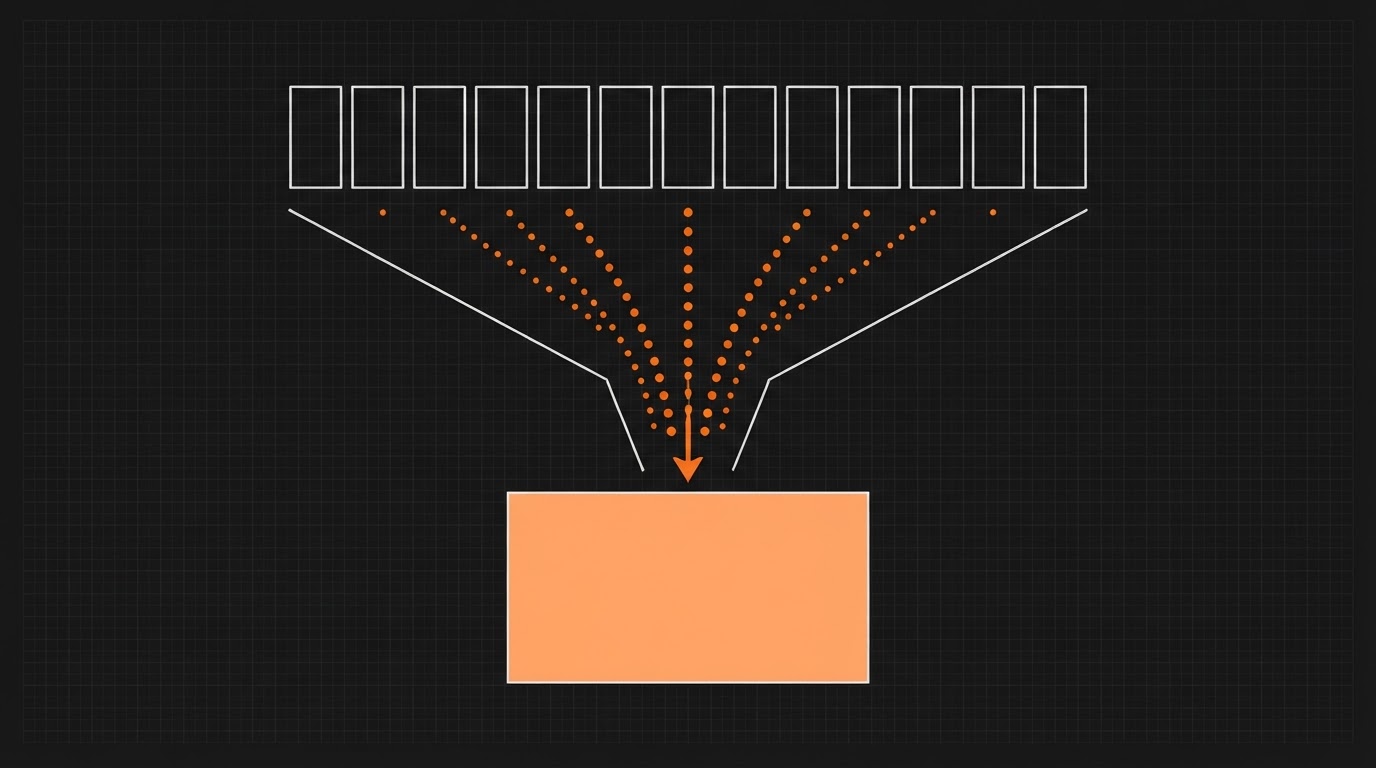
- The bridge is content that is short-form in pacing but long-form in subject: a teaser, a part one, or an answer that is obviously incomplete.
- Do not put a "watch the full video" call to action at the end of a Short. Put the curiosity gap in the middle.
- Playlists and end screens do more work than pinned comments, which almost nobody opens.
- Measure the conversion with unique viewers who watched both, not with subscriber count.
Key facts
- Default subscriber expectation
- More Shorts
- Best bridge format
- Incomplete answer
- Where to place the hook
- Middle, not end
- Strongest surface
- Playlists + end screens
- Weakest surface
- Pinned comment
- Metric that matters
- Cross-format unique viewers
Almost every creator who grows on Shorts eventually hits the same wall. The subscriber count looks excellent. The long-form videos get a fraction of the views the subscriber count implies. Nothing is broken — the audience simply signed up for a different product.
YouTube treats Shorts and long-form as related but distinct surfaces, and viewers do too. Someone who subscribed after a 30-second video has, in effect, subscribed to your 30-second videos. Converting them is a content design problem, not a promotion problem.
Why the obvious approach fails
The standard move is to end a Short with "full video on my channel". It rarely works, for a simple structural reason: at the end of a Short, the viewer's thumb is already moving. The format trains people to swipe on completion. An instruction delivered at the exact moment of swiping is an instruction delivered to nobody.
The end of a Short is the worst place to ask for anything. By then the viewer has already decided to leave.
The alternative is to create the curiosity gap earlier — around 60 to 70 percent of the way through — so the viewer finishes the Short already holding an unanswered question. That question, not your call to action, is what makes them look for more.
Three bridge formats that actually convert
1. The incomplete answer
Answer a real question genuinely and completely, at the level a 45-second video allows — then name the thing you deliberately did not cover. Not as a tease, as an honest scope statement: "This works for oily skin. Dry skin needs the opposite order, which is a longer conversation." The viewer now knows a specific piece of information exists and where it lives.
2. The part one that stands alone
A Short that is satisfying on its own but is explicitly episode one of something. The key word is satisfying — a part one that feels like a trailer performs badly, because trailers do not earn retention. Deliver value, then reveal there is a sequence.
3. The result before the method
Show the outcome in the Short and put the method in the long-form video. This works best for anything with a visible before and after — a transformation, a build, a fix, a comparison. The Short proves the result is real, which is the only thing that makes a 12-minute method video worth starting.
| Format | Best for | Why it converts | Failure mode |
|---|---|---|---|
| Incomplete answer | Education, advice | Names a specific missing piece | Feels like withholding |
| Standalone part one | Series, stories | Establishes a sequence | Reads as a trailer |
| Result before method | Transformations, builds | Proves the payoff first | Result not visual enough |
| Straight teaser | Almost nothing | Low retention, no value | Viewer feels baited |
The surfaces that carry the traffic
- 1Put every related Short and the long-form video in the same playlist. Playlists are the most underused structural tool on YouTube and they create a genuine next step.
- 2Use end screens on the long-form video to point at the next long-form video, not back at Shorts. Once someone is watching long-form, keep them there.
- 3Keep your channel homepage sections separate — a Shorts shelf and a long-form shelf — so a new visitor can see both products exist.
- 4Write long-form titles as search queries. Shorts viewers who become curious frequently search rather than browse.
- 5Reference the long-form video by its actual title in the Short, spoken aloud. "Search for X on my channel" outperforms "link in bio" by a wide margin.
- 6Skip the pinned comment as your primary mechanism. It is worth adding, but almost nobody opens comments on a Short.
Pacing: the change most creators miss
A viewer arriving from Shorts has been trained on a cut every one to two seconds. Dropping them into a long-form video with a 40-second unedited introduction loses them in the first ten seconds, no matter how good the content is.
- Open long-form videos with the same hook discipline you use on Shorts — outcome or objection first, within five seconds.
- Keep the first 60 seconds tightly cut, then let the pace relax once the viewer has committed.
- Add chapters. Shorts-native viewers navigate rather than watch linearly, and chapters make that possible instead of frustrating.
- Caption long-form too. The habit of watching on mute does not disappear because the video got longer.
- Put the payoff on screen early. A long-form video that withholds its subject for two minutes reads as padding.
5s
to state the payoff in long-form
60s
of tight pacing before relaxing
60–70%
through the Short to place the gap
Measuring it honestly
Subscriber count is the wrong metric for this, because it cannot distinguish between a Shorts subscriber and a long-form one. Look instead at whether the same people are watching both formats.
- Unique viewers who watched both a Short and a long-form video in the same period — the only direct measure of the bridge working.
- Traffic source on the long-form video: how much arrives from channel pages and playlists rather than from search or suggested.
- Returning viewer share on long-form. If it is flat while Shorts grows, the bridge is not carrying anyone.
- Average view duration on the first 60 seconds of long-form, tracked before and after you change the opening pacing.
Frequently asked questions
Do Shorts subscribers count the same as long-form subscribers?
For the public number, yes. For behaviour, no — they subscribed expecting the format they saw, and they need a deliberate reason to try a longer video.
Should I post Shorts and long-form on the same channel?
For most creators, yes. Splitting them makes the bridge structurally impossible, and YouTube handles mixed channels well as long as your homepage sections are organised.
How many Shorts should point at one long-form video?
Three to five is a reasonable working ratio, each entering the topic from a different angle rather than repeating the same tease.
Is a pinned comment worth adding?
It costs nothing and occasionally helps, but treat it as a bonus. Playlists, end screens and a spoken title do the real work.
Does uploading Shorts hurt my long-form reach?
There is no evidence of a penalty. What does happen is an audience composition shift, which is a content problem rather than a distribution one.
How long should the bridge long-form video be?
Shorter than your usual. Eight to twelve minutes converts a Shorts-native audience far better than a 25-minute deep dive, which you can save for your established viewers.
Sources & further reading
- YouTube Help — Shorts and your channelOfficial documentation on how Shorts behaves alongside long-form uploads.
- YouTube Help — end screens and cardsHow to configure the surfaces that carry viewers between videos.
- YouTube CreatorsPlatform guidance, including audience-development fundamentals.
- Nielsen Norman Group — how users read onlineAttention research that explains why pacing mismatches lose viewers.
- VerbCraft: Shorts vs Reels in IndiaThe platform differences that shape how you write for each.
- VerbCraft: hooks that survive the first 1.5 secondsThe opening discipline your long-form videos also need.
Use this article elsewhere
Copy a structured brief for ChatGPT, Claude, Perplexity or Gemini — it includes the key points and the canonical link so the assistant can cite VerbCraft properly.
https://verbcrafts.in/blog/youtube-shorts-to-long-form-funnel